SERION autoimmune
b2GP1
The presence of anti-b2GP1 autoantibodies in patients is an indication for systemic lupus erythematosus and antiphospholipid syndrome. b2GP1 is a plasma protein which plays a role in lipid metabolism and hemostasis, together with phospholipids.
Systemic lupus erythematosus (SLE) is an autoimmune disease with multisystemic involvement. The condition has numerous phenotypes, with varying clinical presentations, ranging from mild mucocutaneous manifestations to multiorgan and severe central nervous system involvement. Common symptoms include painful and swollen joints, fever, chest pain, hair loss, mouth ulcers, swollen lymph nodes, fatigue, and a red rash, most commonly on the face. Often there are periods of illness, called flares, and periods of remission during which symptoms are few. Despite recent advances in technology and understanding of the pathological basis and risk factors for SLE, the exact pathogenesis is still not well known. Besides b2GP1 autoantibodies, several other pathogenic autoantibodies have been identified.
Anti-phospholipid syndrome (APS) is a systemic autoimmune disease. The disease is characterized by arterial, venous or microvascular thrombosis, as well as pregnancy complications such as pre-eclampsia, premature birth or spontaneous abortion. APS can also have non-thrombotic manifestations, such as thrombocytopenia. Besides b2GP1 autoantibodies also circulating anti-phospholipid antibodies (APLA) play a central role in the diagnosis of APS.
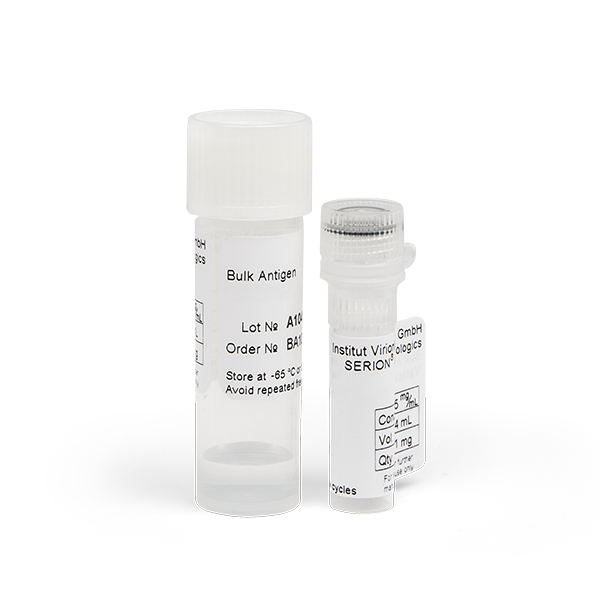
Virion\Serion´s b2GP1 antigen (BA505R01) is recombinantly expressed in insect cells and purified via Strep-tag affinity chromatography, which guarantees high quality and availability.
Please let us know if you are interested in 0.25 mg test sample.